Applicant tracking systems (ATS) mainly store, sort and filter job applications, and what they do depends on the product and on the settings each employer chooses. Common beliefs about automatic rejection, special templates, keyword stuffing and resume scores are only half true. The reality is simpler: a plain, honest resume that software and people can both read, and accurate answers to every application question. Behaviour varies by employer, so follow each posting's instructions.
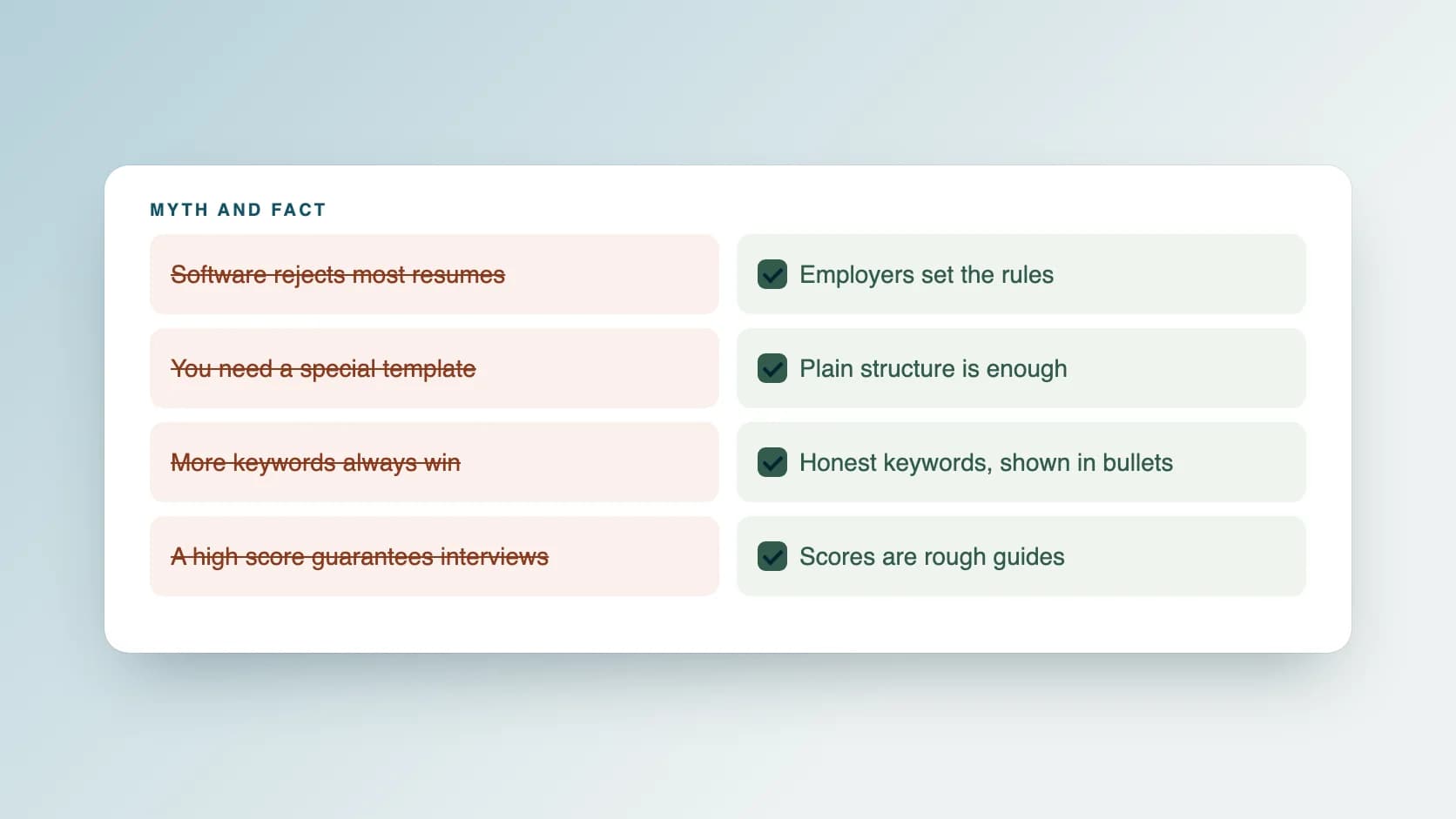
Myth: an ATS automatically rejects most resumes
You often see a claim that software throws out most resumes before a person sees them. No reliable evidence supports any specific figure, and the number is usually repeated with no source. In general, an ATS organises applications. Rejections tend to come from rules an employer sets, such as knockout questions, or from a recruiter filtering a large pile.
What to do: answer every required question accurately, and write a resume that a person and software can both read.
Myth: you need a special ATS template
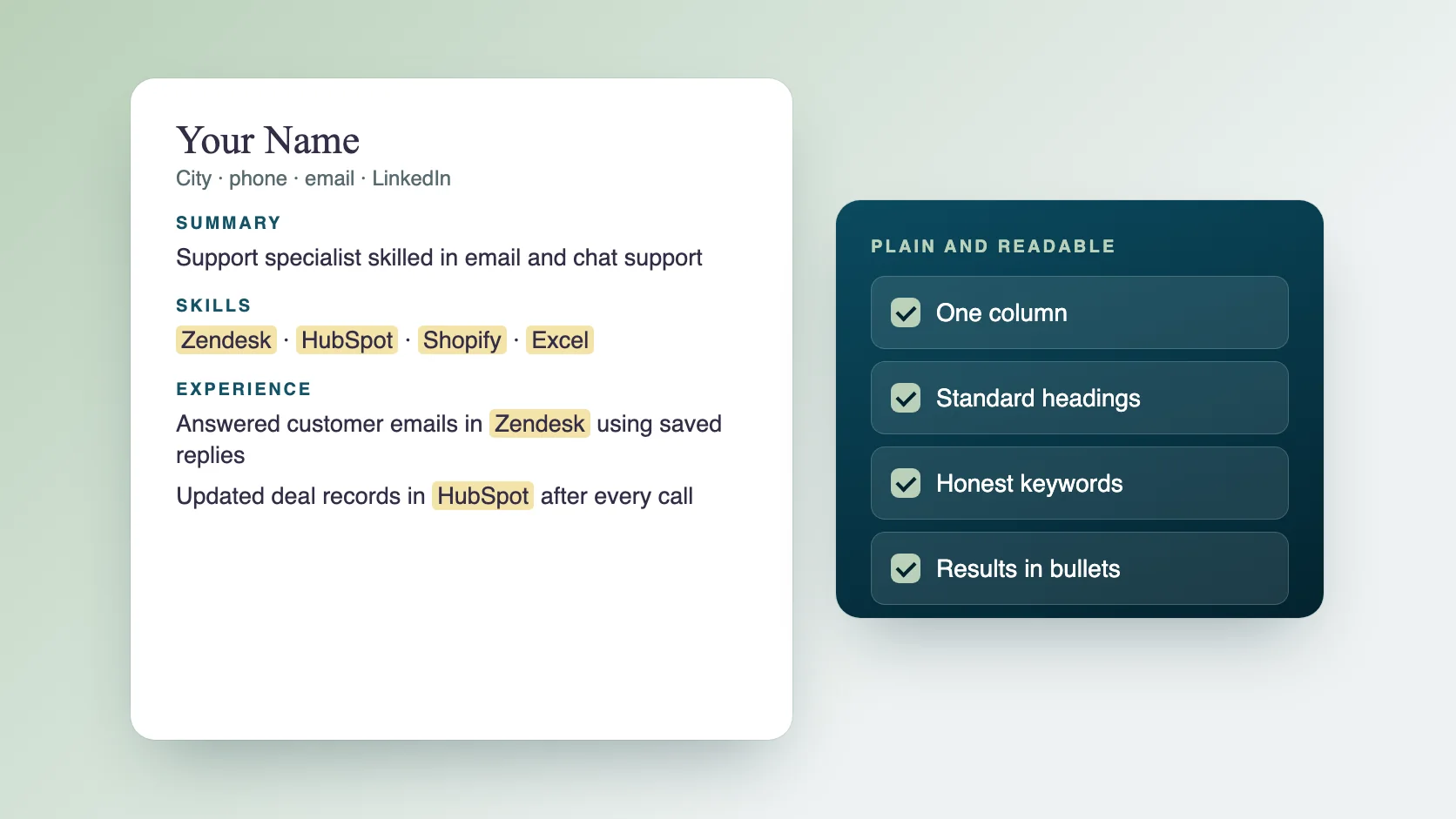
You do not need a branded template. You need plain structure: one column, standard headings, real text and a readable font. Fancy graphics, text boxes and tables are the main thing that can confuse a parser.
What to do: start from a simple layout. Our guide on how to write an ATS-friendly resume shows one.
Myth: more keywords always beat the system
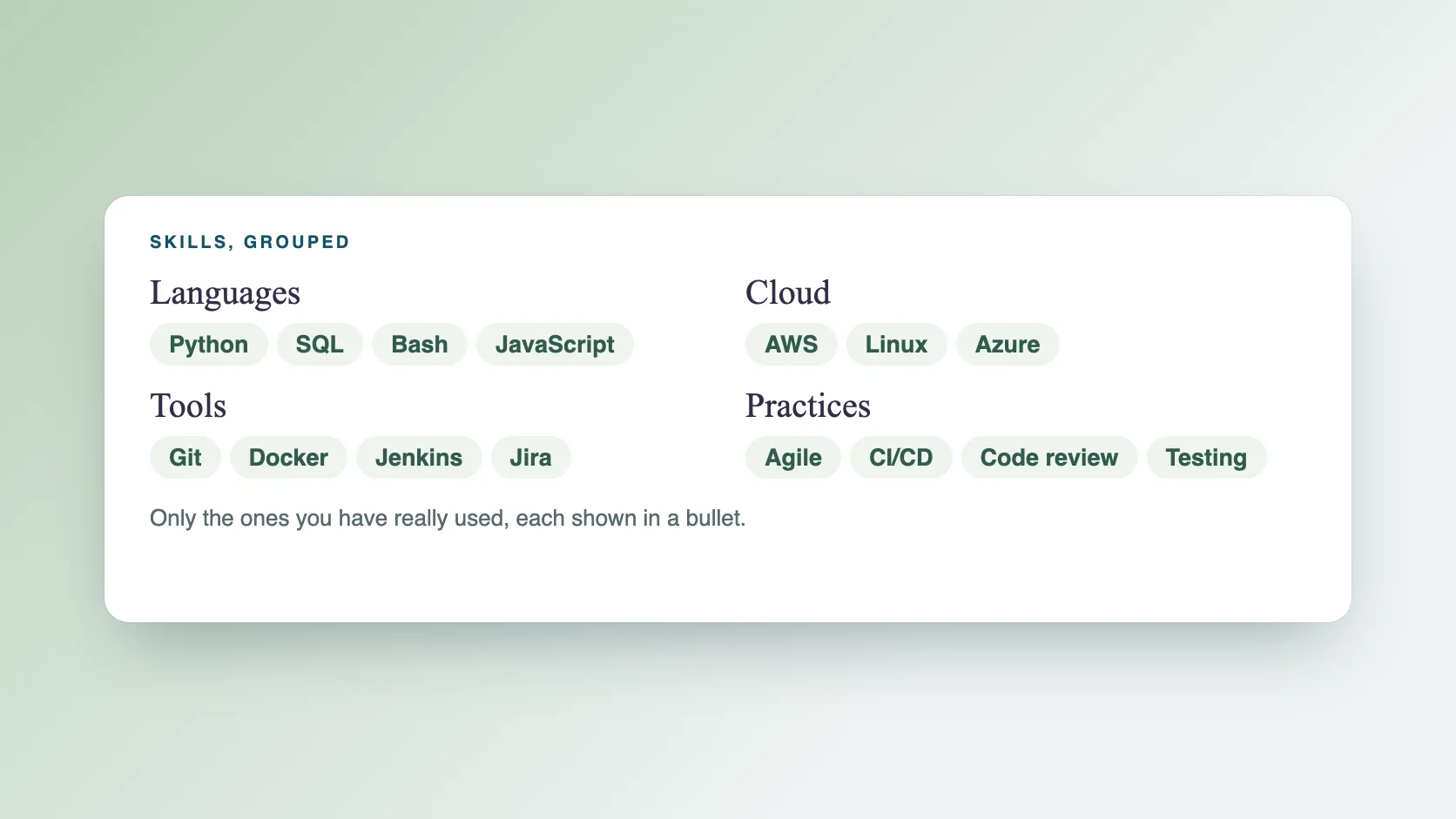
Keywords matter, because recruiters search and filter by them. But repeating a term many times or listing skills you do not have does not help. People read the resume next, and interviewers ask about anything on it.
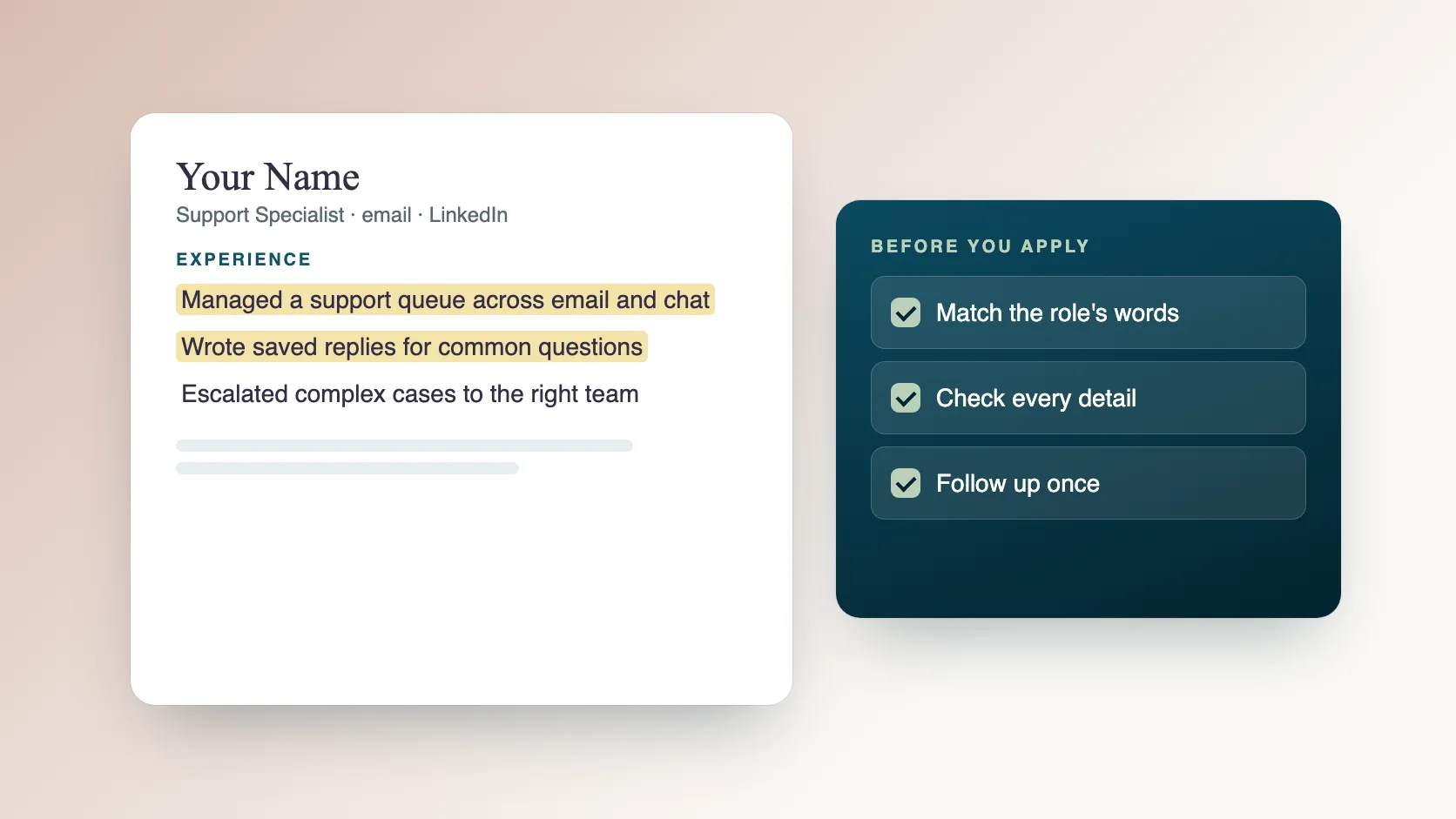
What to do: use the posting's key terms where they are true, and show each one in a bullet.
Myth: hidden text with keywords gets you through
Hiding keywords in white text is a bad idea. A person can find it, it looks dishonest and it can get your application discarded.
What to do: put honest keywords in plain sight.
Myth: a high resume score guarantees an interview
Online checkers give scores, but they are tools made by their own companies, not a view into any employer's system. A high score is a rough guide to readability, not a promise.
What to do: use a checker for hints if you like, then read your resume as a recruiter would.
Myth: PDFs always fail, and Word files always work
Support depends on the system and on how the file is made. A text-based PDF is often fine, and a scanned image of a document is not. A standard Word file is a safe choice if nothing else is said.
What to do: follow the posting's instructions. If there are none, use a standard Word file or a text-based PDF.
Myth: the ATS is the only reader
After any filtering, a person reads the resume, often quickly. A resume that passes software but is dull or vague still loses.
What to do: lead with relevant results, in short bullets.
Myth: knockout questions do not matter
Required questions on the application form, for example about work authorisation, a licence or years of experience, can screen candidates out automatically. This is one place where a rule can reject an application without a person reading it.
What to do: read each question carefully, answer truthfully and apply to roles you qualify for.
What does an ATS actually do?
In general, it collects applications, reads your resume into fields such as titles, dates and skills, stores them and lets recruiters search, sort, filter and move candidates through stages. What can go wrong is mostly about readability: a layout the system cannot parse, missing dates or text in images.
How can you test your resume?
Copy the text of your resume into a plain text editor. Check that the order makes sense, that dates and titles are in the right place and that nothing is missing. If it looks scrambled, simplify the layout.
How does Ragiles career support fit in?
Ragiles career support rebuilds your ATS resume around the keywords in the roles you want and rewrites your LinkedIn profile to match. Our team then sends at least 200 job applications a day on different job platforms, Monday to Saturday. We cannot promise a job offer. See the career support page.
Common questions
Does every company use an ATS? Not all, and the systems differ. Treat these as general principles.
Should I tailor my resume for each job? Yes. Adjust the order of your skills and your top bullets for each role.
Where can I read more? See our guide on resume keywords for IT and technical roles.