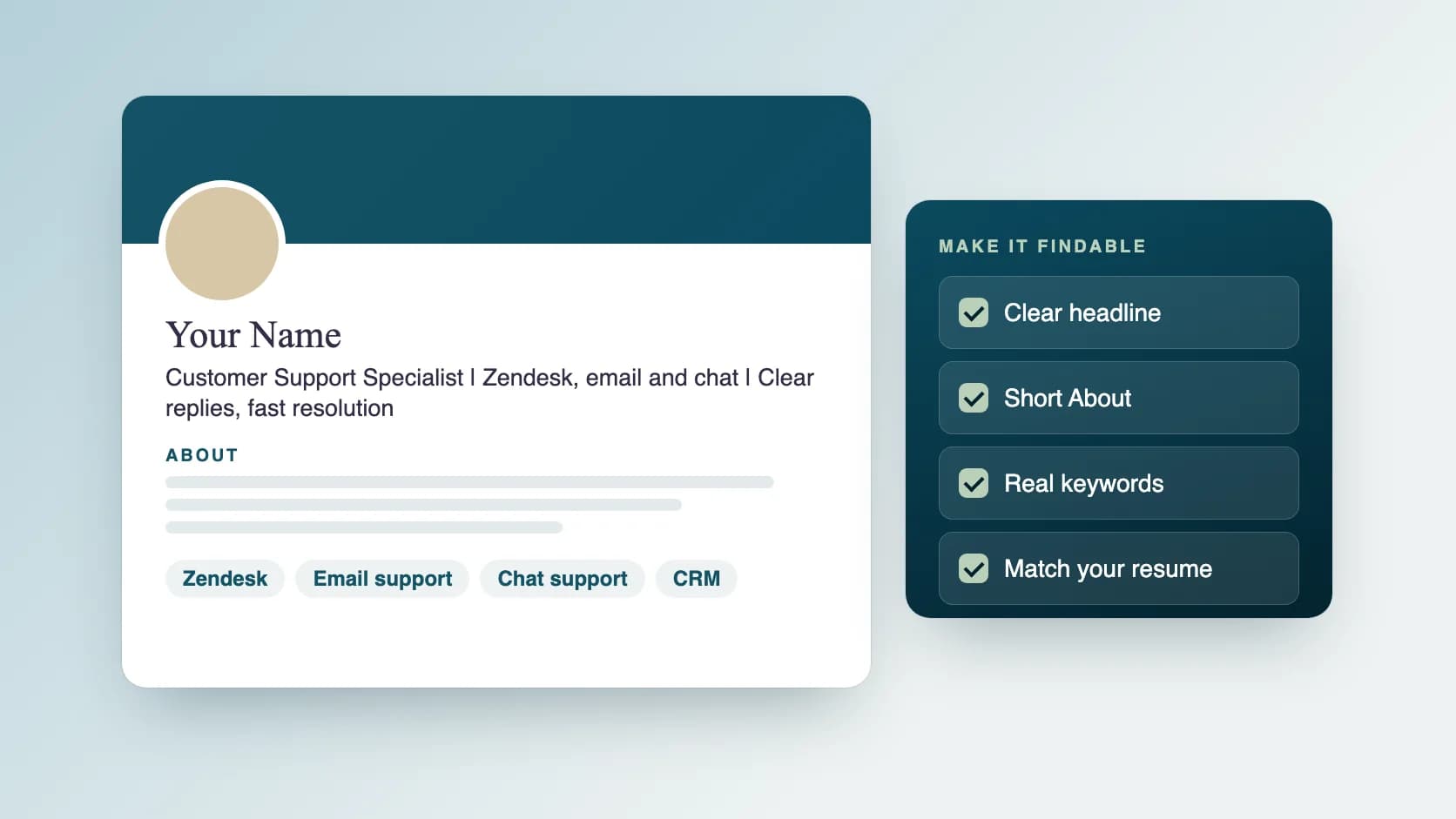
A LinkedIn profile that recruiters find has a clear headline with the target role and key skills, a short About section that explains who you help and how, experience bullets that show results and a skills list that matches the jobs you want. Each part takes only a few minutes to write well.
Why does your LinkedIn profile matter in a job search?
Many recruiters and hiring managers look at a candidate's LinkedIn profile before they reply, and many search for candidates by job title, skills and location. A profile that is incomplete or vague is easy to skip. A clear one answers the questions a recruiter asks in the first few seconds: what do you do, what are you good at and are you right for this role?
How do you write a strong LinkedIn headline?
Your headline shows next to your name in search results and comments, so it does the most work. Use your target role, two or three key skills and, if you can, the kind of problem you solve. Avoid vague words such as passionate or hard-working.
- Customer Support Specialist | Zendesk, email and chat | Clear replies, fast resolution
- Software Engineer | Python, AWS, APIs | Building reliable backend systems
- Operations Coordinator | Scheduling, reporting, CRM | Keeping teams on track
- Seeking roles in: data analysis | SQL, Excel, Power BI
What should your About section say?
Keep it short and in plain language. Use first person, and put the most important facts in the first two lines, because many readers will not click to expand it. A simple structure works well.
- Line one: who you are and what you do, with your target role.
- Two or three lines: the kinds of work you have done, with tools and results.
- One line: what you are looking for next.
- One line: how to reach you.
What does a good About section look like?
Here is an example for a support specialist. Replace the details with your own, and only use facts that are true.
I help customers get quick, clear answers. For the last few years I have handled email and chat support in Zendesk, using saved replies and clear escalation notes to keep response times short. I enjoy turning common questions into simple help articles. I am looking for a customer support role at a growing software company. You can reach me by message or at the email below.
How do you write your experience section?
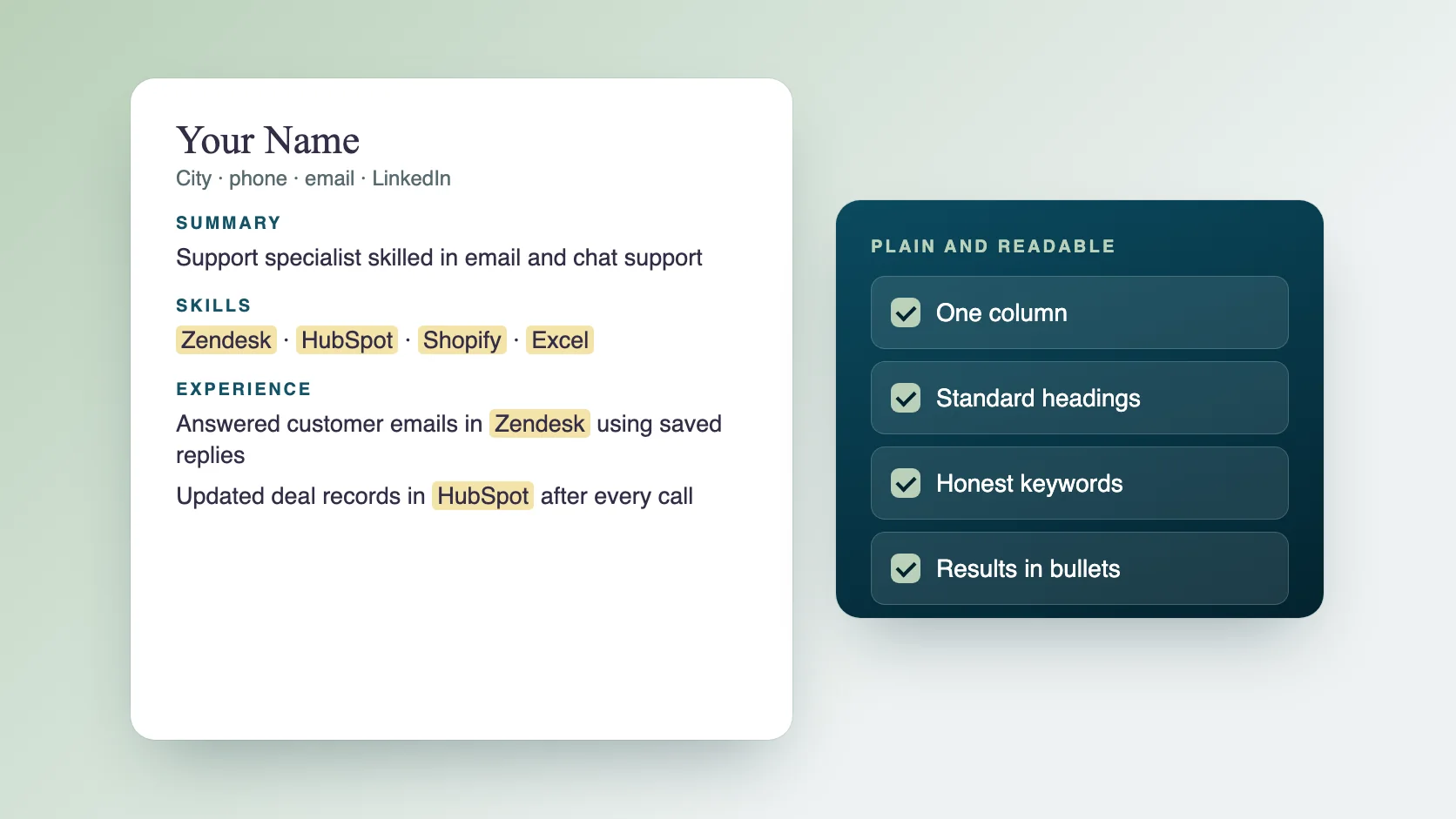
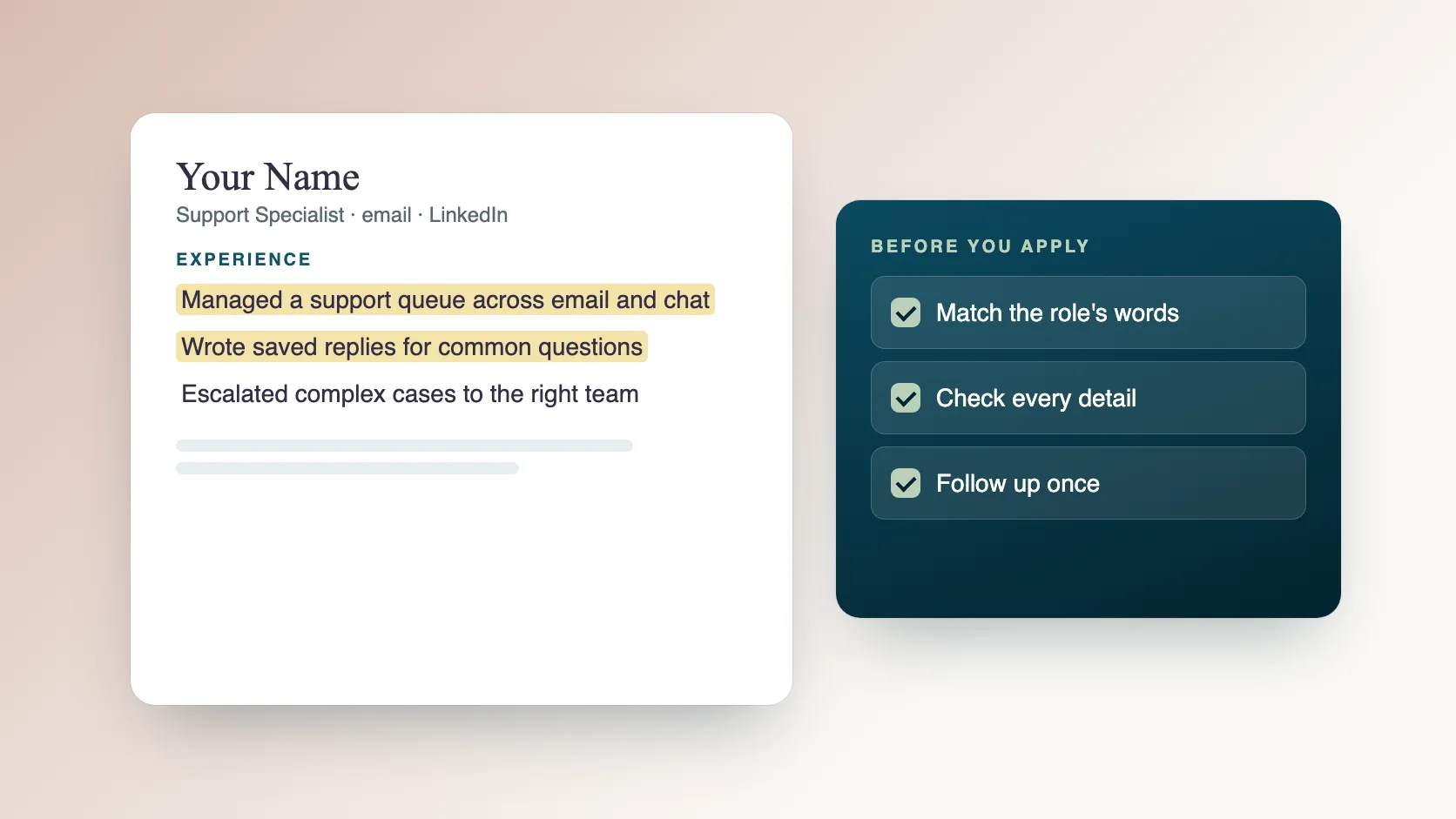
Use the same bullets you wrote for your resume: action, task, tool and result. Keep them short, put the most relevant roles first and use the terms job postings use. Our guide on how to write an ATS-friendly resume shows the pattern with examples.
How should you choose your skills?
List the skills that appear most often in the postings for the role you want, and only the ones you can discuss. Put the most important ones first. Fewer, relevant skills beat a long list of everything you have ever touched.
What else should you fix on your profile?
Small details add up.
- A clear, recent photo of your face, with a plain background.
- A custom profile web address based on your name.
- Your location and industry set to match your target roles.
- Your current job title written in the form recruiters search for.
- Contact details recruiters can use.
- The open-to-work setting, if you want recruiters to know. Check LinkedIn's help pages for the current options and who can see them.
How do you keep your LinkedIn profile and resume consistent?
Use the same job titles, dates and companies on both. A recruiter who sees two different stories will trust neither. After you change one, update the other.
What are the tips for IT and technical profiles?
Name the tools and environments you work in, and link to projects or write-ups when you can share them. Group skills by type, and show what you built or fixed and what changed. A short, specific line about impact is better than a long list of tools.
What mistakes should you avoid?
These are the most common.
- A headline that only says Looking for opportunities.
- A long About section full of buzzwords.
- Skills that do not match the roles you want.
- Job titles that differ from your resume.
- Claims you cannot support in an interview.
- A profile that has not been updated in years.
How does Ragiles career support help with LinkedIn?
Ragiles career support rewrites your LinkedIn headline, summary and skills to match the roles you want, and rebuilds your ATS resume to match. Our team then sends at least 200 job applications a day on different job platforms, Monday to Saturday, with AI speeding up the work and a person sending each one. We cannot promise a job offer. See the plans and the placement fee on the career support page.
Common questions
Do I need a LinkedIn profile to get a job? It is not required everywhere, but many recruiters expect to find one.
How often should I update my profile? Whenever you start a new role or finish a project, and before a job search.
Should my profile match my resume? Yes. Use the same titles, dates and companies.
Can I use AI to write my profile? You can use it for drafts, but check every line is true and in your own voice.